

Edible images allow you to quickly and easily decorate the surface of a large cake. Or a huge batch of cupcakes that instantly become bright, beautiful, and festive in just a couple of minutes. Many pastry chefs use edible printing as a lifesaver for large orders, tight deadlines, and other emergencies. It should be noted that some projects can only be realized in this format. And another nice bonus: an edible image for a cake will cost much less than other types of decoration. We have already discussed edible paper in detail in this article https://farina.com.ua/syedobnaya-pischevaya-bumaga, and today we would like to talk about edible ink.
Edible Ink: Consumer Information
Food-grade ink for a printer used to print edible images differs significantly from standard typographic ink. Regular inks are quite toxic and are not suitable for human consumption. The printer must also be used exclusively for food printing. In this case, the image is absolutely safe for you and your children. Naturally, this applies when the colored products are consumed in moderation.
Edible ink: composition. The exact formulation may vary among different manufacturers. We will look at the composition using a high-quality product as an example - Kopyform ink made in Germany. The ingredients include:
The first three ingredients are unlikely to cause any concern. But let's take a closer look at the last two. E1520 hides propylene glycol, a substance recognized as safe for humans. It is used everywhere: in the cosmetic and pharmaceutical industries, in the production of sweets, alcoholic and non-alcoholic carbonated drinks, etc. Why is it needed? It increases the shelf life of the ink. In addition, it brings invaluable health benefits by preventing the reproduction of bacteria on the printer head and in an open package of ink. Bonus: it has a sweetish taste. This leaves E422, which turns out to be the well-known glycerin. We encounter it daily in the composition of good chocolate, baked goods, and confectionery. As well as in cosmetics and medicines. And yes, it is also sweet.
Edible Printer Ink (Technical Information)
If you have decided to take up edible printing, this information is for you. Let's start with what edible ink is used for:
How to Store Edible Ink
The ink must be stored in a cool, dark place, away from direct sunlight and heat sources. The bottles should stand strictly in a vertical position. After each cartridge refill, screw the cap on tightly. Ink can evaporate if exposed to air.
Useful Tips
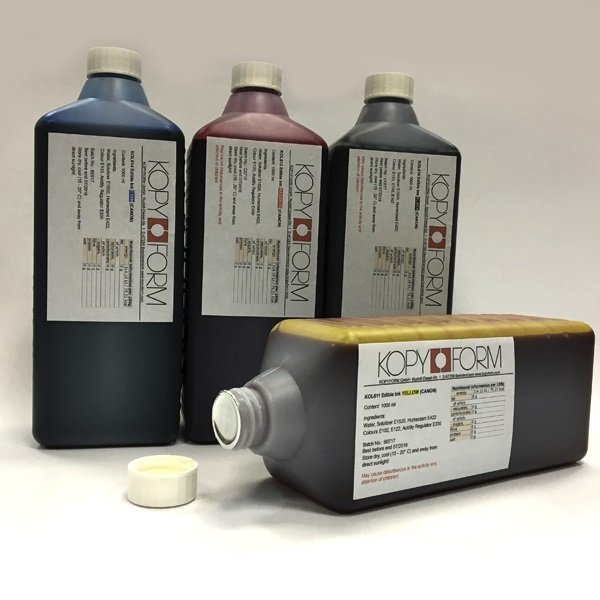
 You will need to buy edible ink in four colors. Three base colors: yellow, blue, red, and black. You will also need wafer and sugar paper, and a printer. The printer must absolutely be new! If regular, non-edible inks have ever been printed on it, it is no longer suitable for this work. Not all printer models are suitable for food printing. Be sure to consult an expert before buying.