
24 Jul

Posted By
0 Comment(s)
2513 View(s)
Summer is the season of fruits and berries, natural joy, and a vitamin abundance. But you can't stock up on vitamins for the whole year, so thrifty pastry enthusiasts are actively making preserves. They make delicious preserves, prepare fruit butter (povidlo). Some skilled bakers make jam or wonderful homemade confiture. Let's start by figuring out how these products differ from each other.
What is the difference between povidlo and preserves
Some classify povidlo as a type of preserve, but in reality, they only share the ingredients - fruit and sugar. For preserves, chopped fruits and whole berries are used, sometimes even with pits. Povidlo is cooked from fruit purée. Sugar content: for preserves, sugar is usually taken in a 1:1 ratio, meaning 1 kg of sugar per 1 kg of fruit. For povidlo, this ratio will be approximately 1:0.8, meaning 800 g of sugar per 1 kg of fruit. Moreover, sugar is added at the end of boiling, and in some cases, not added at all.
But the most important difference between povidlo and preserves is consistency. Preserves retain a lot of fruit juice, essentially liquid. Well-reduced povidlo can be so thick that it is cut with a knife. Based on these properties, the question arises: where is povidlo used? Unlike preserves, povidlo can be used as a filling for baked goods. Buns, gingerbread, hand pies, and even open tarts - during baking, povidlo retains its shape, flavor, and aroma. What kind of povidlo is there: apple, plum, or apricot are cooked most often. The fact is that these fruits contain the most pectin - natural gelling agents. Thanks to them, the sweet treat has pronounced bake-stable properties.
What is the difference between povidlo and jam
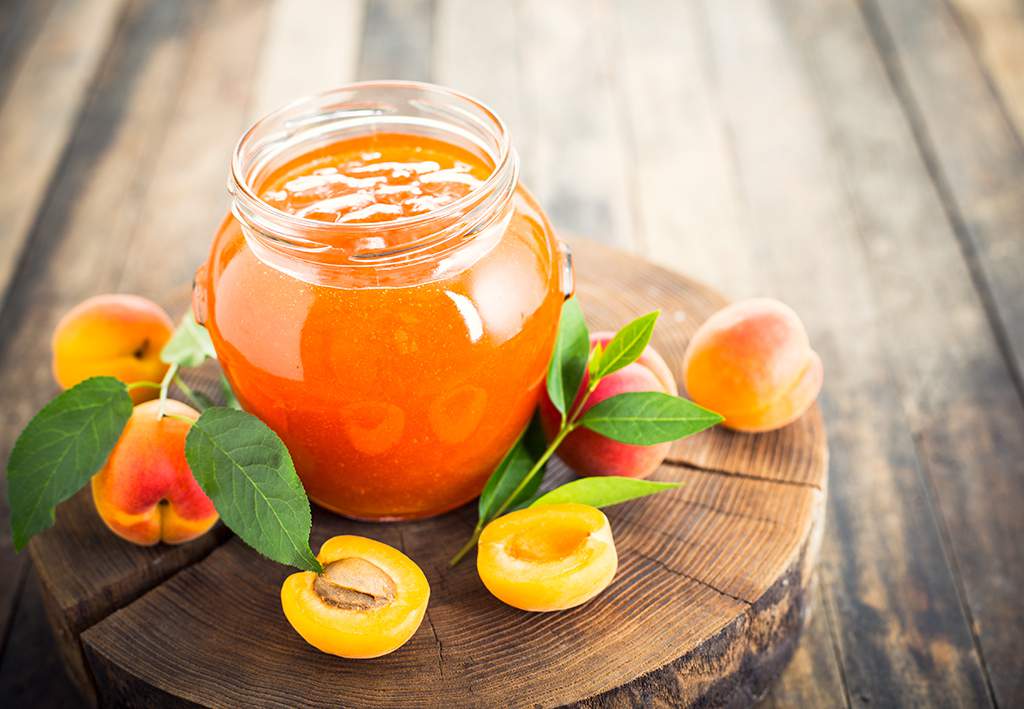 What is jam: it is a fruit product with a soft jelly-like consistency. Visually, jam and povidlo can be very difficult to distinguish from each other. In addition, both have bake-stable properties, which further enhances the similarity. The main differences lie in the preparation. To cook povidlo, ripe, grated or puréed fruits are used. For jam, it is better to take slightly unripe fruits - they contain more pectin. They are coarsely chopped and boiled over high heat for no more than half an hour.
What kind of jams are there. It is best to make jam from sweet and sour types of berries and fruits - apples, currants, gooseberries, etc. To make jam from sweet fruits, add some apples to them. Jams can also differ in texture. The consistency can be either absolutely uniform or contain pieces and whole berries. But the mass must definitely be viscous and hold its shape well. Properly prepared jam is not afraid of either heating or freezing. Therefore, it is suitable for making baked goods and cold desserts.
What is the difference between povidlo and confiture
Now you know the difference between povidlo and jam, but how does it differ from confiture? Confiture is a variety of jam but has a number of significant differences. It must contain fruit pieces or berries evenly distributed throughout the jelly mass. Confitures differ from jams in greater thickness, as they are cooked with the addition of extra gelling agents. For example, dry pectin or agar-agar. Another question that arises among beginner bakers is how povidlo differs from jelly. Here everything is simple: jelly is prepared from juice and a gelling agent. After setting, it is solid, uniform, and transparent, without foreign inclusions.
Where to store and how to use povidlo
What is jam: it is a fruit product with a soft jelly-like consistency. Visually, jam and povidlo can be very difficult to distinguish from each other. In addition, both have bake-stable properties, which further enhances the similarity. The main differences lie in the preparation. To cook povidlo, ripe, grated or puréed fruits are used. For jam, it is better to take slightly unripe fruits - they contain more pectin. They are coarsely chopped and boiled over high heat for no more than half an hour.
What kind of jams are there. It is best to make jam from sweet and sour types of berries and fruits - apples, currants, gooseberries, etc. To make jam from sweet fruits, add some apples to them. Jams can also differ in texture. The consistency can be either absolutely uniform or contain pieces and whole berries. But the mass must definitely be viscous and hold its shape well. Properly prepared jam is not afraid of either heating or freezing. Therefore, it is suitable for making baked goods and cold desserts.
What is the difference between povidlo and confiture
Now you know the difference between povidlo and jam, but how does it differ from confiture? Confiture is a variety of jam but has a number of significant differences. It must contain fruit pieces or berries evenly distributed throughout the jelly mass. Confitures differ from jams in greater thickness, as they are cooked with the addition of extra gelling agents. For example, dry pectin or agar-agar. Another question that arises among beginner bakers is how povidlo differs from jelly. Here everything is simple: jelly is prepared from juice and a gelling agent. After setting, it is solid, uniform, and transparent, without foreign inclusions.
Where to store and how to use povidlo
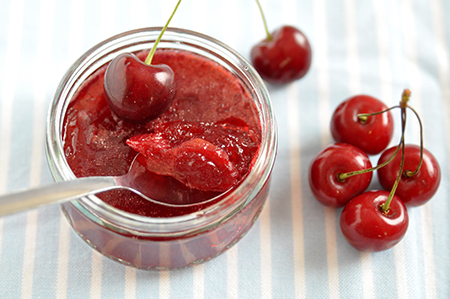
What is jam: it is a fruit product with a soft jelly-like consistency. Visually, jam and povidlo can be very difficult to distinguish from each other. In addition, both have bake-stable properties, which further enhances the similarity. The main differences lie in the preparation. To cook povidlo, ripe, grated or puréed fruits are used. For jam, it is better to take slightly unripe fruits - they contain more pectin. They are coarsely chopped and boiled over high heat for no more than half an hour.
What kind of jams are there. It is best to make jam from sweet and sour types of berries and fruits - apples, currants, gooseberries, etc. To make jam from sweet fruits, add some apples to them. Jams can also differ in texture. The consistency can be either absolutely uniform or contain pieces and whole berries. But the mass must definitely be viscous and hold its shape well. Properly prepared jam is not afraid of either heating or freezing. Therefore, it is suitable for making baked goods and cold desserts.
What is the difference between povidlo and confiture
Now you know the difference between povidlo and jam, but how does it differ from confiture? Confiture is a variety of jam but has a number of significant differences. It must contain fruit pieces or berries evenly distributed throughout the jelly mass. Confitures differ from jams in greater thickness, as they are cooked with the addition of extra gelling agents. For example, dry pectin or agar-agar. Another question that arises among beginner bakers is how povidlo differs from jelly. Here everything is simple: jelly is prepared from juice and a gelling agent. After setting, it is solid, uniform, and transparent, without foreign inclusions.
Where to store and how to use povidlo
All the products listed in the article must be poured into jars while hot. Before the povidlo sets, it has a more liquid consistency, it is easier to move, and no voids form in the jar. If you try to pack a set product, air pockets will form between its pieces. And air, as is known, affects shelf life for the worse. Therefore, pour hot povidlo into jars, wait until a small crust forms on the surface, and close the lid tightly. Sugar is a great preservative, so the more sugar, the longer the shelf life. Closed jars can be stored in a cool, dark place - a cabinet, cellar, or pantry. Open ones must be placed in the refrigerator.
Application: povidlo can be used as a filling for all kinds of baking. Cookies, buns, croissants, gingerbread, muffins, hand pies, rolls, pies. Serve povidlo with ready-made dishes - crepes, pancakes, or just spread it on toast. Jam is perfect not only for baking but also for ice cream, cheesecake desserts, and various semi-finished products for freezing. (Povidlo, unlike jam, cannot be frozen). Confiture can serve as an independent dessert or a spectacular component for layered desserts. For example, trifles, cakes, casseroles.
Classic apple povidlo recipe
Remember the pancakes with povidlo from childhood? Let's make that very apple povidlo right now. You will need apples, preferably slightly tart (from 1 kg) and sugar.
Preparation: 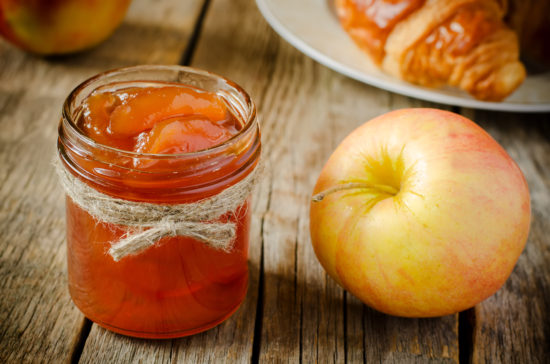 Wash the apples, peel and core them, cut them into slices.
Pour a glass of water into a thick-bottomed saucepan and add the apples.
Simmer them over low heat under a lid until softened.
Purée the soft fruits through a sieve.
For each cup of purée, take ⅓ cup of sugar and put it in the saucepan.
Cook the povidlo over low heat, stirring frequently. The longer you cook, the thicker the povidlo will be.
Remove the thickened povidlo from the heat, let it cool slightly, and pour into glass jars.
Happy baking!
Wash the apples, peel and core them, cut them into slices.
Pour a glass of water into a thick-bottomed saucepan and add the apples.
Simmer them over low heat under a lid until softened.
Purée the soft fruits through a sieve.
For each cup of purée, take ⅓ cup of sugar and put it in the saucepan.
Cook the povidlo over low heat, stirring frequently. The longer you cook, the thicker the povidlo will be.
Remove the thickened povidlo from the heat, let it cool slightly, and pour into glass jars.
Happy baking!
Wash the apples, peel and core them, cut them into slices.
Pour a glass of water into a thick-bottomed saucepan and add the apples.
Simmer them over low heat under a lid until softened.
Purée the soft fruits through a sieve.
For each cup of purée, take ⅓ cup of sugar and put it in the saucepan.
Cook the povidlo over low heat, stirring frequently. The longer you cook, the thicker the povidlo will be.
Remove the thickened povidlo from the heat, let it cool slightly, and pour into glass jars.
Happy baking!